
Infosys shares experienced a significant drop, hitting a 52-week low, after the company announced its Q4FY26 results and provided a modest revenue growth guidance of 1.5-3.5 per cent in constant currency for FY27, falling below market expectations and raising concerns about AI-led deflation and margin pressures.

Kiran Mazumdar-Shaw names niece Claire Mazumdar as successor at Biocon. Explore the leadership transition, strategy, and future plans.

Despite initial pressure from the West Asia conflict, analysts are optimistic about the Indian hospital sector's outlook, citing strong demand drivers and ongoing expansion plans that are expected to fuel significant revenue growth over the next few years.

Indian stock markets are expected to remain highly sensitive to geopolitical developments, particularly the US-Iran situation, and crude oil prices this week, with analysts also highlighting the influence of the rupee-dollar trend, foreign investor activity, and upcoming inflation data.

Precious metal prices surged in futures trading, with silver hitting Rs 2.93 lakh per kg and gold nearing Rs 1.68 lakh per 10 grams, driven by safe-haven demand following US-Israel strikes in Iran and retaliatory attacks.

Jewellery majors Titan Company and Kalyan Jewellers reported robust Q4 FY26 results, with Titan's consolidated revenue surging 81 per cent year-on-year, largely propelled by a sixfold increase in bullion and digital gold sales. Despite strong top-line growth, Titan's gross and operating profit margins faced pressure due to the higher share of lower-margin gold products and increased marketing expenditure.

Indian stock market benchmarks Sensex and Nifty rebounded strongly after a two-day decline, driven by falling crude oil prices and positive global cues amid hopes of de-escalation in the Middle East.
The rupee appreciated 13 paise to close at 90.34 against the US dollar on Thursday, on trade deal optimism and overnight decline in commodity prices, even as the upside remained capped as investors look for more clarity on the India-US trade deal.

Pharmaceutical major Cipla reported a 3 per cent year-on-year decline in March quarter revenue to Rs 6,541 crore, with net profit falling 55 per cent to Rs 554.6 crore, missing consensus estimates. Despite strong growth in India and Africa, a significant decline in North American sales impacted overall performance, with the company now focusing on new product launches and regulatory filings to drive future gains.

Indian investors have seen their wealth erode by a staggering Rs 48.29 lakh crore since the West Asia war began on February 28, leading to a significant downturn in the BSE Sensex and NSE Nifty, driven by geopolitical tensions and rising crude oil prices.

'Wipro's challenge is not lack of ideas. In fact, some of its recent structural moves are arguably bolder than peers.' 'The problem is proving it can operationalise these bets faster and more consistently.'

Robin Liu steps down as India CEO of OnePlus. The company shares key updates on its India operations and future strategy. Here's what it means for the brand and market.

Analysts predict a surge in gold and silver prices as investors seek safe-haven assets due to escalating tensions in the Middle East. The impact on domestic prices will depend on the conflict's duration, with geopolitical factors and macroeconomic data also playing a role.
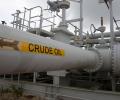
Crude oil prices experienced a significant drop following the announcement of a US-Iran ceasefire and the reopening of the Strait of Hormuz, leading to heavy selling by traders.

The upcoming Tata Sons board meeting in June could possibly throw some light on several critical issues that may have a bearing on the future of the corporate behemoth.
Indian markets on Dalal Street rallied sharply as easing tensions in the US-Iran conflict and stable oil prices boosted sentiment. Track Nifty 50 and BSE Sensex performance and key global triggers.

Benchmark indices Sensex and Nifty experienced a significant decline, falling over 1 per cent due to foreign fund outflows and global uncertainties.

Shares of Indian life insurance companies, particularly SBI Life Insurance and Canara HSBC Life Insurance, saw significant declines after the Department of Financial Services (DFS) secretary, M Nagaraju, stated that banks are being asked to avoid exclusive tie-ups with their own insurance subsidiaries and instead remain neutral.
Indian stock markets tumbled sharply with the Sensex falling 800 points and nearly 4 lakh crore wiped out in a single session. Here are the 6 key factors, including rupee weakness and global cues, behind the crash.
Benchmark indices Sensex and Nifty tumbled in early trade on Friday after a two-day rally, tracking a weak trend in global peers, as the US-Iran conflict continues to be a key overhang for the markets. Track Sensex, Nifty50 movement and key market drivers for March 27, 2026.

Worries about global politics and trade are pulling the Nifty 50 down. Experts say the market could drop further low.

Dabur India's stock has fallen over 17 per cent since the start of the Iran war, driven by concerns over a weak monsoon, the West Asian crisis, and rising input costs, which are expected to impact the company's revenues and margins, particularly affecting its significant rural sales and international markets.

India's wholesale price inflation surged to 8.30 per cent in April, up from 3.88 per cent in March, primarily driven by a significant increase in the prices of fuel, power, and crude petroleum, according to data from the commerce and industry ministry.

India's home-grown EV startups say the government's auto PLI scheme is helping big players while shutting out innovators building electric two- and three-wheelers from scratch.

Foreign Portfolio Investors (FPIs) remained in a selling mode in January, withdrawing nearly Rs 36,000 crore (about $3.97 billion) as global uncertainties persisted. Meanwhile, a higher securities transaction tax (STT) proposed in the Union Budget may weigh on overseas investor participation in the near future.

Manufacturers are planning a hike of over 15 per cent in the second quarter of calendar year 2026, as memory prices shoot through the roof.

Employees with artificial intelligence skills are likely to see better salary increments in the coming years, especially in technology, GCCs, and BFSI sectors, according to TeamLease Edtech.
Employees with artificial intelligence skills are likely to see better salary increments in the coming years, especially in technology, GCCs, and BFSI sectors, according to TeamLease Edtech.

New investors should enter gradually and with a long horizon. 'Staggered investment through systematic purchase plans is advisable rather than lump-sum buying.'

Benchmark stock indices Sensex and Nifty dived sharply by nearly 2 per cent on Sunday after Finance Minister Nirmala Sitharaman proposed a hike in the Securities Transaction Tax (STT) on derivatives. Reversing the early gains, the 30-share BSE Sensex plunged sharply by 2,370.36 points or 2.88 per cent to slide below the 80,000-mark at 79,899.42 in afternoon trade as the finance minister announced a hike in STT on futures contracts to 0.05 per cent from the current 0.02 per cent.

Artificial Intelligence is rapidly transforming Formula One, with teams like Williams and Red Bull using AI for race strategy, data analysis and operations as tech partnerships and sponsorship revenues surge.

Gold prices surged by Rs 4,000 to touch an all-time high of Rs 1,37,600 per 10 grams in the national capital on Monday, tracking firm global cues, according to the All India Sarafa Association. The precious metal of 99.9 per cent purity had closed at Rs 1,33,600 per 10 grams on Friday.

West Asia conflict triggers sharp sell-off in Indian markets, with realty, banking and auto stocks leading losses amid energy shock fears.

There are hopes of a turnaround in overall corporate earnings after six quarters of single digit growth.

The Indian rupee crashed to a record closing low against the US dollar due to rising global crude oil prices, a strengthening dollar, and geopolitical tensions in the Middle East.

Companies in the fast-moving consumer goods (FMCG) sector are losing favour with equity investors, with their price-to-earnings (P/E) ratio declining to its lowest level in six years, now trading at 38.8 times trailing earnings.

India's plans to ration the consumption of liquefied natural gas (LNG) and liquefied petroleum gas (LPG) - in response to reduction in their import owing to war in West Asia - may fall short of what is needed to meet domestic needs.

Stock market sentiment is likely to remain optimistic going ahead, though some consolidation cannot be ruled out after the recent sharp rally in the benchmarks, analysts said. According to experts, the Nifty and Sensex could indeed move towards new record highs before the end of the year, if global cues stay supportive, crude oil prices remain benign and there is continued domestic earnings momentum.

A US-sanctioned tanker carrying Iranian crude oil has rerouted mid-voyage from its previously indicated destination of India to China, raising questions about payment issues and the future of India's Iranian oil imports.

Indian stock markets are set to be influenced by ongoing developments in the US-Iran conflict, fluctuations in crude oil prices, and the latest quarterly earnings reports from major corporates, with foreign investor activity also playing a crucial role.
